"My mother taught me that a sweater mended before the frost is warmer than one patched after. This syllabus is that needle-work for the whole family."
The galaxy speaks of Odysseus returning home. But return requires departure—and departure requires preparation. When the ice storms buried Medford in 1987, the families who moved first were not the wealthiest; they were the ones who had rehearsed.
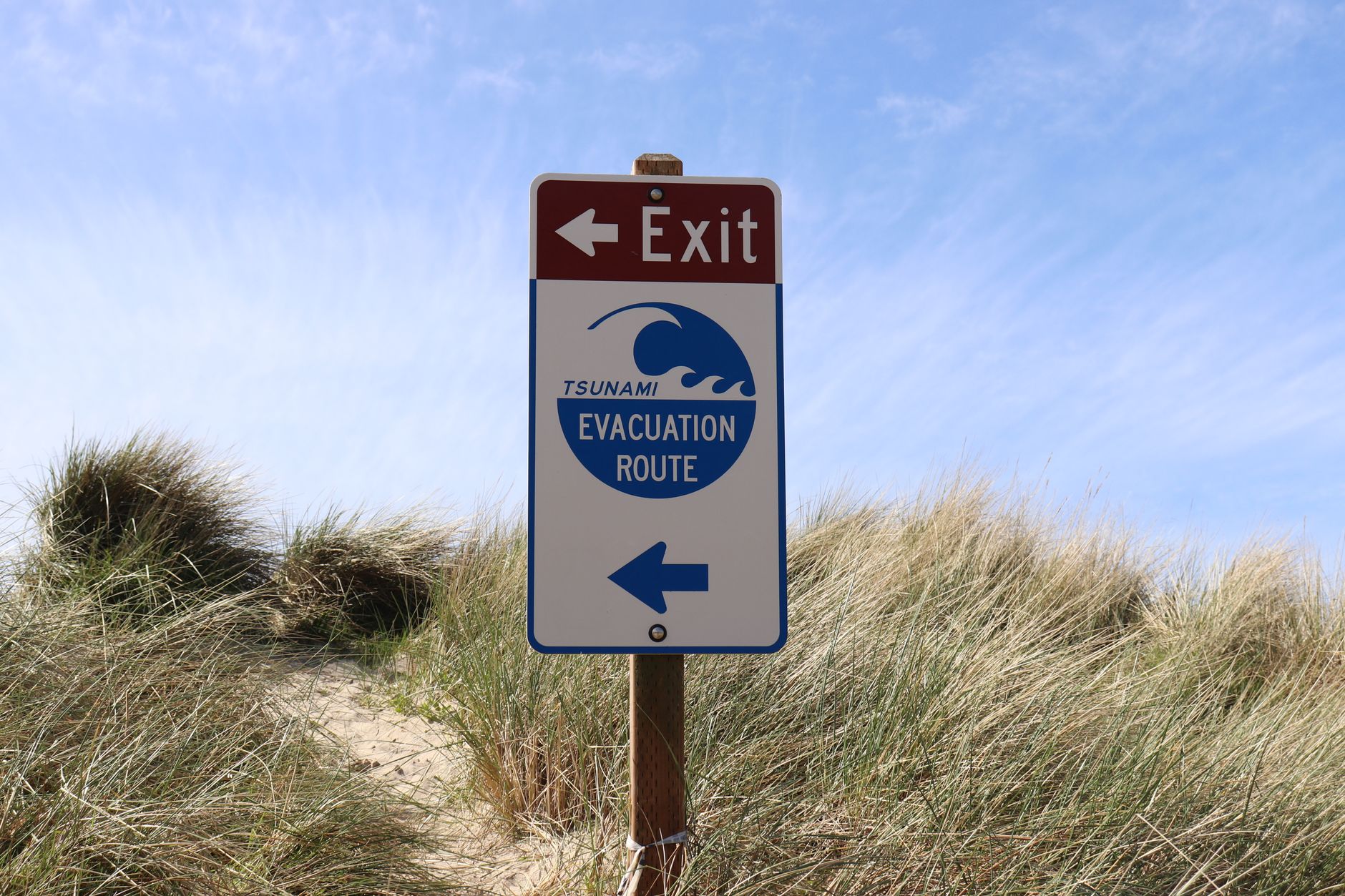
This is not a metaphor. This is a fourteen-week curriculum, grounded in the protocols of emergency evacuation (Q606332) and the American Preparedness Movement (Q7240647).
Weeks 1–2: Risk Assessment & Threat Mapping
Objective: Identify the hazards that demand departure.
- Map local flood zones using FEMA flood maps (download, print, laminate).
- Document three escape routes from your residence—one primary, two secondary.
- Interview elders in your neighborhood about past disasters (oral history archive).
- Create a household inventory: what moves, what stays, what burns.
Weeks 3–4: Supply Chain & Cache Points
Objective: Establish resupply nodes along your routes.
- Pack three "go-bags" per family member (water filter, thermal blanket, radio, meds).
- Bury a cache at midpoint of primary route (weatherproof container, GPS coordinates memorized).
- Test water purification methods: boil-time, tablet dosage, pump flow-rate.
- Practice ration calculations: 2 liters/person/day × 14 days = household total.
Weeks 5–6: Communication Trees & Signal Protocols
Objective: Ensure contact survives network collapse.
- Draft a contact tree: each adult responsible for 3 households, each child for 2 adults.
- Memorize three rally points (school, church, hilltop)—coordinates written on laminated cards.
- Establish coded messages for "safe," "moving," "waiting" via ham radio or text burst.
- Conduct blackout drill: 48 hours without grid power, only battery and candlelight.
Weeks 7–8: Mobility Drills & Load Testing
Objective: Prove the family can move with full gear.
- Full-load march: 10 miles with 30lb pack, timed and debriefed.
- Vulnerable-member simulation: carry infant/elder on stretcher over rough terrain.
- Vehicle prep: fuel stabilizer, spare tires, paper maps in glovebox.
- Night-evasion drill: depart by moonlight, navigate by stars and compass.
Weeks 9–10: Shelter-in-Place vs. Evacuate Decision Matrix
Objective: Train judgment, not just muscle.
- Build decision matrix: wind-speed > 74mph OR water-rise > 3ft = evacuate immediately.
- Role-play false alarms: when to stay put despite sirens (resource conservation).
- Study Medford 1987: why some basements held and others failed (structural integrity).
- Install analog clocks in every room (digital fails in EMP).
Weeks 11–12: Intergenerational Knowledge Transfer
Objective: Encode survival skills into the youngest minds.
- Teach children to identify edible plants within 1 mile of home.
- Drill fire-starting with flint, ferro rod, and magnifying glass (three methods).
- Record oral histories: grandparents' stories of past evacuations (audio archive).
- Create "memory stones": carved tokens bearing family codes and rally coordinates.
Weeks 13–14: Full-Scale Simulation & Documentation
Objective: Execute the departure and write the after-action report.
- Trigger drill: midnight alarm, 90-second departure window.
- Execute primary route to cache, establish perimeter, test comms.
- Return and debrief: what broke, what lagged, who froze?
- Update the syllabus: version 2.0 with corrections in red ink.